




The programme ‘Develop and implement sustainable farming systems for cost-effective agricultural production in a changing climate for various soil and climate zones of Kazakhstan’ for 2024-2026
Projects

Information on the main results of research for 2025 under the programme ‘Develop and implement sustainable farming systems for cost-effective agricultural production in a changing climate for various soil and climate zones of Kazakhstan’ for 2024-2026
Scientific research and scientific and production tests were carried out in the individual soil and climatic zones of the country. The main area ofresearch included the development of a climate-oriented, soil, resource-saving system of agriculture, taking into account the production relevance and natural factors of each zone. Studies included analysis and assessment of climate change, sustainable intensification of land use practices based on control of soil degradation, reduction of mechanical treatment of soils, principles of restoring agriculture, improvement of soil health, resource-saving food regimes and plant protection based on precision farming, targeted use of solid and liquid forms of mineral and biological fertilizers, stimulators of plant growth and development, the use of blood crops, diversification of crop rotations and agrobiodiversity, new irrigation methods based on the principles of "Smart irrigation."
The analysis shows variation and a high degree of correlation between the level of spring wheat yield and the moisture coefficient, hydrothermal porosity depending on the soil and climatic zones. The development and development of scientifically based farming systems, depending on the agro-ecological zones of the country, will reduce the impact of drought, reduce the variation in crop yields, and increase the resistance of crop production to climate change.
The analysis shows that in the territory of Kazakhstan during the growing season of 2025 in the north of Kazakhstan in the summer there was relatively cool and rainy weather in the second half of the vegetation of crops, in the west - moderately dry and in the south of the republic - hot and very dry weather. For the growth and development of crops, favorable weather conditions have developed in Seve-ro-Kazakhstan, Akmola and Kostanay regions, relatively favorable - in Pavlodar region, relatively unfavorable (moderate drought) - in West-no-Kazakhstan and Aktobe regions, very unfavorable (severe drought and heat) - in Almaty, Zhambyl and Turkestan regions.
Preliminary results show that diversified crop rotations with the inclusion of grain, legumes, and oilseeds are economically profitable in rent and protein terms. The largest output of total grain from a unit of crop rotation area of17.7 c/ha is provided by grain crop rotation of oats, wheat, wheat, barley. The largest financial income is provided in the fruitful crop rotation. The largest yield of wheat grain is provided by the permanent sowing of spring wheat. The choice of the structure of crops will depend on the specialization of agricultural formations.
When growing spring wheat according to the direct sowing system in grain-steam crop rotation, the yield is formed after the steam field at the level of 35.5 c/ha and after stubble precursors - 29.3-30.3 c/ha. The yield level of spring wheat for stubble precursors, regardless of the place in the crop rotation, is practically at the same level (29-3-30.3 c/ha). The profitability of growing lentils is higher compared to wheat. The cost of a unit of wheat and lentils is 26.0 thousand tenge per 1 ton. The cost of other crops is higher compared to wheat and lentils.
On ordinary chernozem soils of the lungs, in terms of mechanical composition in the Kostanay region, flax yield is formed almost at the same level when it is placed after the steam field and on stubble precursors. The highest yield of wheat is formed after pea culture - 35.4 c/ha, wheat after soybean culture - 36.1 c/ha and after lentils - 34.1 c/ha. The yield of spring wheat is formed at the same level when growing according to the No-Till system (direct sowing) and with a minimal tillage system. High profitability is provided by the crop-mouth "sunflower-wheat-pea-hard wheat-flax-wheat" - 213.4%. Financial profit per 1 hectare is 220,848 tenge. Minimum profitability of production when using grain-steam crop rotations with a large share of grain crops.
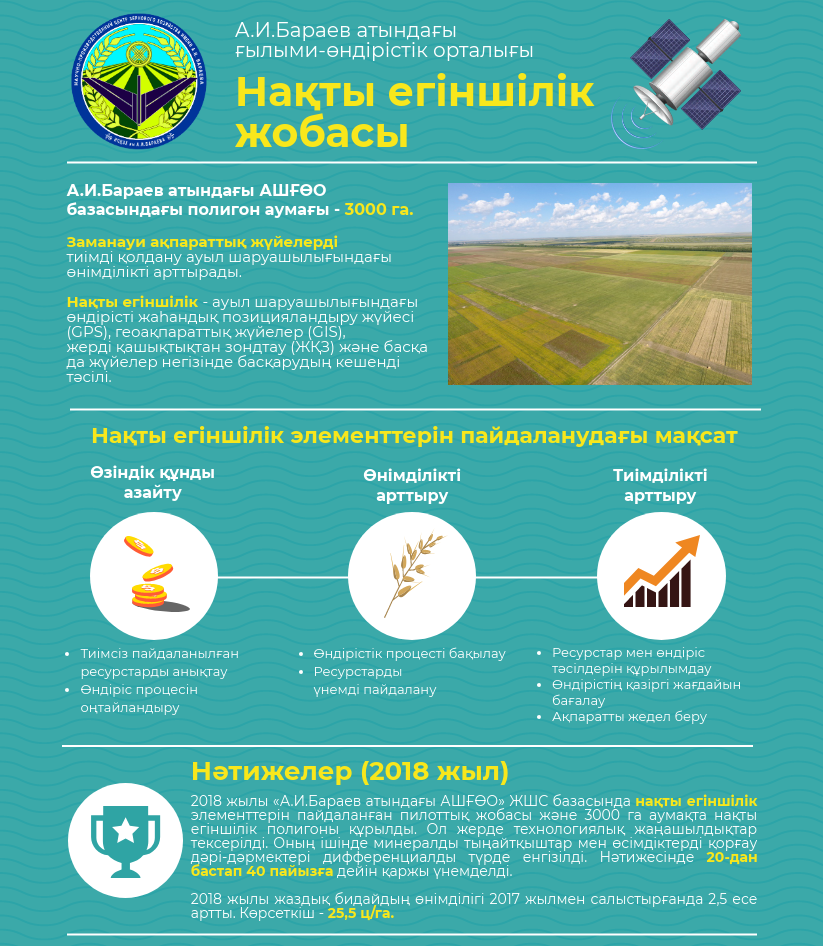
Water erosion of soils is progressing. Special studies show (using the example of land use of the northern exposure) that the total length of all water courses/ravines in one field reaches 38 km. On an area of2.4 thousand hectares, the number of stream flows can reach 230 pieces with a total length of watercourses/ravines up to 190 km. To develop anti-erosion measures, the use of GIS technologies and remote sensing in determining the network of watercourses will make it possible to evaluate and plan on-farm work. The use of 3D design increases the accuracy of calculations of the volume and area ofwashed away soil, which is necessary.
The developed spectral maps make it possible to establish the relationship between the productivity of crops and the terrain. Spatial heterogeneity in the fertility of soils in the fields has been established, depending on the relief, cli-mat. Digital maps of slope steepness, exposure, relief, soil-forming rocks, granulometric composition of soils, maps of soil differences, fertility are the initial information and will make it possible to develop adaptive landscape technologies for sustainable production of agricultural products.
In the conditions of the Turkestan region, the issues of soil salinization, land reclamation with the use of biomeliorant for basic treatment at a rate of 3.5 tons/ha, soil enhancer 350 kg/ha and use in spring for chiseling organic biomeliorant at a rate of 0.5 t/ha and soil enhancer 50 kg/ha improves soil carbon content, increases the yield of the domestic cotton variety "Makka thaaral 5027" up to 33.2 c/ha At the same time, the highest financial profit is ensured.
In the conditions of the south of Kazakhstan on light chestnut soils, the relationship between the indicators of the diversity of soil fertility and the yield of agricultural crops was determined. The correlation coefficient between humus content and alkaline hydrolysable nitrogen was 0.92, with a coefficient of determination of 85%. Production inspection on an area of30 hectares in the farm "Svetlana" of the Zhambyl district of the Almaty region using aerial photography with an unmanned summer apparatus DJI "Mavic 3 Multispectral" made it possible to practically determine zones with reduced biomass and heterogeneity of plant development. This made it possible to identify possible problems associated with a lack of moisture and nutrients for making decisions
Under the prevailing weather conditions during the vegetation of crops, natural factors are more efficiently used when sowing spring wheat in the optimal sowing time from 05 to 20 May. At the same time, grain of better quality is formed. Late sowing dates lead to the development of diseases and a decrease in grain quality. With reliable weather forecasts, planting earlier is beneficial both from an organizational point of view and from the point of view of making preventive and practical technological decisions.
The timing of sowing has a significant impact on the formation of sunflower yields. The maximum yield of sunflower was noted during sowing on May 10-15 - 31.3-32.24 c/ha, which is 6.05 c/ha more than control (May 5 - 26.19 c/ha).
For the conditions of Northern Kazakhstan, the most effective way to harvest flax is desiccation and mowing with selection after 5 days, providing stable yields and high quality seeds with minimal losses.
In conditions of atmospheric precipitation, the yield of spring soft wheat with the traditional system of tillage without mineral fertilizers is 32.3-38.6 c/ha. The introduction of ammophos (R20 when sown in rows and R60 in a steam field) increases the yield of wheat grain by 20 to 22%. Application of am-mofos with ammonium nitrate along the stubble precursor increases wheat grain yield to 40.3-42.5 c/ha. In fruit rotation, ammophos (P) and ammonium nitrate increase wheat grain yield to 46.0-46.1 c/ha. Application of ammonium nitrate for soil diagnostics with additional application of ammophos and ensure maximum wheat yield at the level of 42.2-47.0 c/ha.
In the conditions of the North Kazakhstan region on chernozem soils, high ren-keeping is provided by fruit-shifting crop rotations, which is associated with high purchase prices for oilseeds and legumes. The profitability of fruit-changing sevobots is 39.0% and higher.
On chernozem soils of heavy mechanical composition of soils in the conditions of the Akmo-Linsky region, the yield potential of spring wheat reaches 42.5 c/ha with high quality with the No-Till system and a minimal tillage system. The yield of spring wheat for stubble predecessors in fruitful crop rotation (after lentils and peas is not inferior to the yield of spring wheat in the steam field and forms at the level of 39.0-40.0 c/ha. When creating optimal levels of soil drinking, protection of plants from pests, diseases and weeds, the yield of permanent sowing of wheat is formed at the level of 34-36 c/ha with direct sowing and a minimal system of tillage and sowing.
Under conditions favorable for moisture, the productivity of flax and horoha culture increases when ammophos is applied (R20 in rows when sowing or R60 in a steam field) with traditional tillage up to 13.4 c/ha and in fruit-shifting - up to 14.6 c/ha and with the No-Till system up to 16.2-16.7 c/ha.
In the conditions of rainfed agriculture in the South Kazakhstan region, it is economically profitable to grow safflower according to the minimum tillage system. In the link of fruit-shift crop rotation when growing winter wheat, the best results of economic efficiency were ensured with direct sowing with an indicator of conditionally net income of 71.8 thousand tenge per hectare with a low grain cost of 5797 tenge/kg. The amount of conditionally net income while minimizing soil treatments to a depth of 8-12 cm was 51.7 thousand tenge/ha with an increase in the cost of grain to 6929 tenge/c.
Preliminary studies made it possible to conclude that the main sources of isolated fungi are: in 50% of cases, this is soil (10 strains), the roots of agricultural plants in 20% of cases and seeds of grain and legumes and wheat leaves in 15% of cases. Under the conditions of the current year, phytopathological laboratory analysis of seed material showed a high degree of infection with gris-booms from the genus Fusarium ssp. (0,5-4,7%), Bipolarius (9,0 -24,0%),Alternaria ssp. (6.0-11.0%), Aspergillus (1.0-14.0%), Penicillium (2.0-20.0%) and Bacterial exudate (0.6-4.0%). Sprouts of spring wheat according to the direct sowing system were more affected by root rot disease during sowing after grain crops compared to the traditional and minimal systems. Damage to plants by bread striped and stem fleas, provolochnik and false wire flax and other soil-feeding pests (pro-volovik) when growing lentils and other crops, bread striped flea (on a leaf surface) and stem flea on spring wheat and barley did not depend on soil treatment systems.
With a direct sowing system (No-Till), spring wheat plants are more affected by sep-torio-helminthosporiotic spotting compared to minimal and traditional tillage systems. The costs of treating seeds and crops against coronavirus and pests with drugs such as spring wheat are justified by 0.65-2.5 times, respectively.
- The yield of spring wheat increases to 16.9 c/ha when using a go-horn mixture in a steam field for biologizing agriculture instead of chemical fertilizers. The yield and quality of spring wheat grain according to traditional plane-cut and chemical steam is higher compared to various components of seed mixtures and methods of their preparation. A low mineralization factor of 1.2-1.9 units (Kmin) is noted in the crops of a sideral mixture of peas and mustard during discarding and mowing using soil slitting.
- Growing various sideral mixtures in a steam field increases the nitrate nitrogen content in the soil next year to 6.0-6.6 mg/kg, which is higher than sowing wheat in a steam field prepared by the traditional and chemical method. Bean-cereal mixtures (peas +oats) and cereal-oilseed mixtures (oats +mustard) have a positive effect on the accumulation of phosphoric acid, which is apparently associated with the accumulation of large biomass. The soil carbon content tends to increase 1.51% when growing a bean-cereal mixture including peas and oats. In wheat crops grown after sideral mixtures, the C: N ratio is found at the level of 7.8-9.4, which indicates the average level of nitrogen saturation of humus. The application of mineral fertilizers does not significantly change the carbon content of the soil. With the No-Till system, the carbon content is slightly higher (1.64%) than traditional (1.56%).
- On the gray-earth soils of Almaty region, the highest yield of yach-me grain is formed when discarding the soil to a depth of 8-10 cm in combination with the introduction of N ₆₀ P ₆₀ + growth stimulator Beres Amino Max, where the yield was 24.9 c/ha. Mini-small yields are observed with flat-cutting tillage without fertilizers - 11.1 c/ha. and the addition of N ₆₀ P ₆₀ and Beres Amino Max increases the barley yield only to 16.0 c/ha. With direct sifting, the yield of barley is lower than with plowing and disk production and varies from 14.9 to 18.6 c/ha.
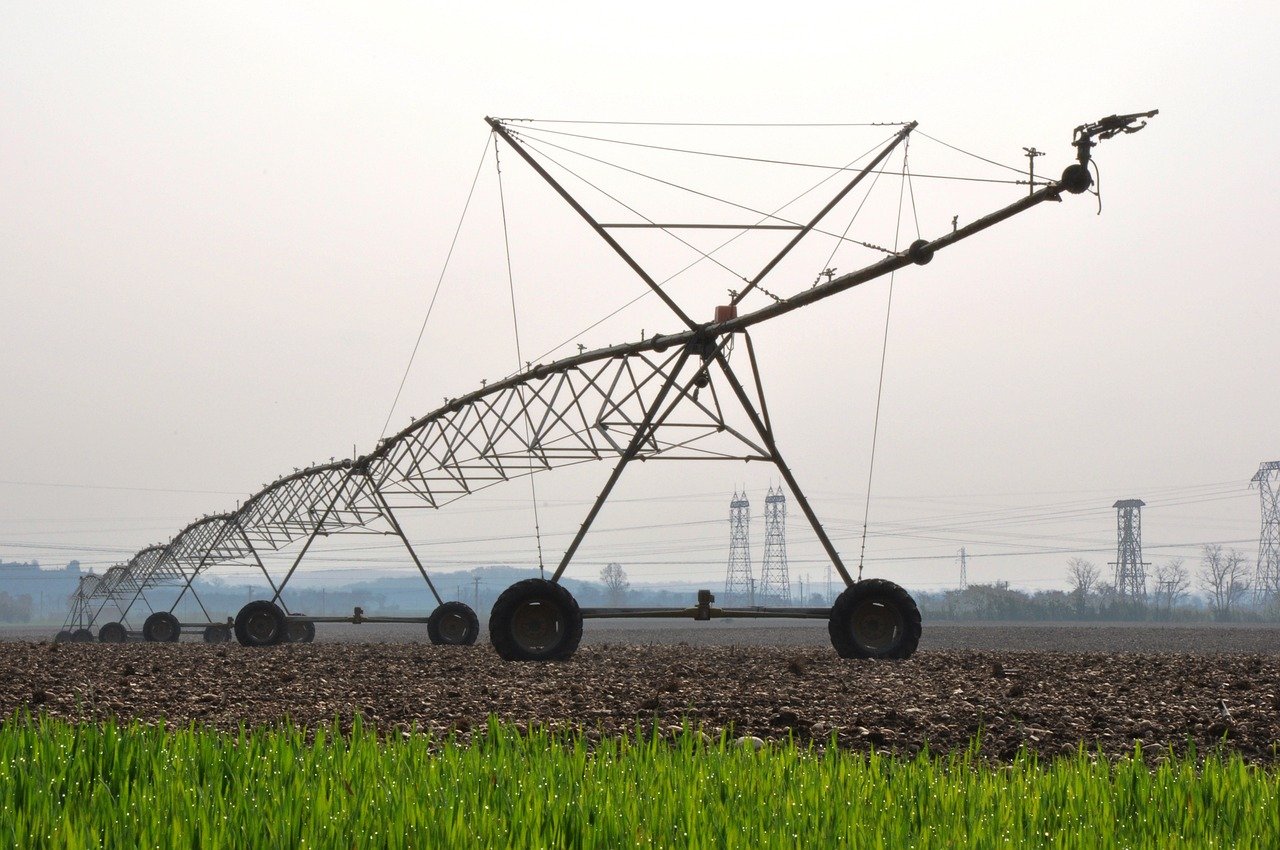
-In the conditions of the irrigated zone of the Almaty region, the most cost-effective irrigation methods are drip irrigation and subsoil drip irrigation, which increase crop yield by 11.4-17.8% compared to other irrigation methods.
The intensity of biomass accumulation and the highest yield of 13.3 c/ha of buckwheat crop is formed during fine irrigation in combination with the traditional soil tillage technology and the ordinary sowing method (15 cm). Sub-soil irrigation is effective in dry years. Scientific and production tests on the fields of Zhylybulak-Merke LLP of the Merkensky district of the Zhambyl region were allowed to reduce costs by 50-60%, save irrigation water by 2-3 times, reduce the number of weeds by 30-50%, reduce mechanical and manual work. A sugar beet crop was obtained with subsurface drip irrigation - 690 c/ha, alfalfa with sprinkling irrigation - 961 c/ha of green mass.
Scientific and production work and adaptation in real production conditions were carried out in experimental, basic farms, specifically in various field-climatic conditions of Kazakhstan. Scientific and production tests, transfer on adaptation to local soil and climatic conditions on the basis of 20 farms and large agricultural formations of new technologies and cost-effective methods for managing the productivity of crops, new irrigation methods on the principles of "smart irrigation" were carried out.
Theoretically, new, initial data of the pattern in the climate-soil-plant environment were obtained to improve applied science and zem-glacial systems.
On a national scale, new strategies and priorities in the rational use of natural and cultural agrocenoses, climatic changes are the scientific basis for the effective and productive use of natural and climatic potential, preserving soil health, controlling soil degradation, mitigating the negative impact of weather changes, and reducing weather dependence.
The developed principles of climate - oriented, soil, resource-saving systems for growing crops are the basis for further improvement of sustainable, climate-optimized growing systems. Priority are the development of sustainable, climate-oriented farming systems, with a low cost of cultivation, the use of elements of information technologies, modern agricultural machinery and instrumentation, and the greening of intensification.