



A scientist’s opinion: 70 years of the spc gf named after A.I. Baraev and new challenges
Главная / News
In 1954, the Central Committee of the Communist Party of the Soviet Union decided to expand the country’s sown areas by developing virgin and fallow lands in the northern regions of Kazakhstan, Siberia, the Urals, and the North Caucasus. The main objective of developing virgin and fallow lands was to provide the country with food grain.
The implementation and success of the grandiose Virgin Lands Project, unprecedented in its scale, would have been impossible without a scientific rationale and the development of scientifically based farming systems, and without new varieties of agricultural crops adapted to arid conditions. There is no comparable example or experience in world practice. On February 14, 1956, the Kazakh Research Institute of Grain Farming (Kazakh Research Institute of Grain Farming) was established on the basis of the Shortandy Agricultural Experimental Station in connection with the development of virgin and fallow lands in the Asian part of the former USSR. Given the scale and importance of the newly developed virgin and previously cultivated lands for the entire USSR, in 1961 the Kazakh Research Institute of Grain Farming was transformed into the All-Union Research Institute of Grain Farming, which was subsequently renamed the All-Union Research Institute of Grain Farming named after Alexander Ivanovich Baraev and assigned new tasks. Today, it is the Scientific and Production Center of Grain Farming named after A.I. Baraev.
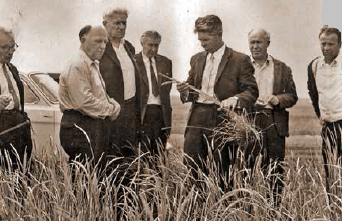
Erosion, drought, and food security—these challenges were successfully addressed by a team of scientists under the leadership of Academician Alexander Ivanovich Baraev, Hero of Socialist Labor!!!
Seventy years is a relatively young age for science in historical terms.
People raised the Virgin Lands. The Virgin Lands raised people!!! A whole constellation of Scientists with a capital S emerged from the Shortandy Scientific Center!! Alongside such outstanding scientists as V.V. Dokuchaev, P.A. Kostychev, N.M. Sibirtsev, V.A. Kovda, K.K. Gedroiz, I.V. Tyurin, N.A. Kachinsky, I.N. Antipov-Karataev, A.A. Rode, T.S. Maltsev, and many other scientists, the name of Alexander Ivanovich Baraev occupies a special place. A farming system was developed that came to be known as the Soil-Protective Farming System!! It was a large-scale Project, commercialization in the broad sense of the word. In total, 25.5 million hectares were plowed during the development of the virgin lands (1954–1960). The proportion of land plowed reached 80–85%. All categories of land were plowed: watersheds, slopes, and patches of solonetzic soils, which led to the development of erosion processes, primarily wind erosion of soils, and the expansion of gullies. Moldboard plowing across vast sown areas caused black dust storms. Tens of thousands of tons of soil, the fertile topsoil layer, were carried away by winds. Soil erosion developed, and the fertile soil layer was blown away. The plowing of millions of hectares of land for crops also led to a reduction in pastureland. As a result, irreparable damage was inflicted on livestock farming, a traditional branch of agriculture. This was comparable to the national disaster in North America known as the “Dust Bowl” in the 1920s.
During the development of virgin and fallow lands, the Government adopted the highly timely and critically important Resolution “On Urgent Measures to Protect Soils from Wind and Water Erosion”. To implement it, scientific research in the country’s various zones was intensified, and factories were established to produce soil-protective agricultural machinery. The main provisions of the unique soil-protective farming system for arid conditions and the control of wind erosion, developed by scientists at the All-Union Research Institute of Grain Farming under the leadership of Alexander Baraev, were flat-cut tillage, which makes it possible to leave up to 80% of stubble (crop residues) on the soil surface to protect the soil from wind; short-rotation grain–fallow crop rotations (3–5 years) with a clean-fallow field serving to accumulate moisture and mineral nutrients; and the sowing of shelterbelt crops to retain snow in winter. Replacing moldboard tillage with tillage that preserves stubble protected the soil from erosion, particularly where stubble crops were the preceding crops. This project became unique, with no analogues in the world.
In a short time, the system of non-moldboard / flat-cut tillage was adopted across 60 million hectares in the country!!! Wind erosion of the soil could have destroyed the newly developed lands!! The ideas of soil-protective farming quickly spread across the fields of the Union. However, this idea also had opponents in the Union. Considerable success in developing non-moldboard tillage was achieved in the Shadrinsk area under the leadership of T.S. Maltsev, an honorary academician of the All-Union Academy of Agricultural Sciences. The difference, however, was that T.S. Maltsev proposed non-moldboard plowing (a plow with its moldboards removed). Under A.I. Baraev’s leadership, the All-Union Research Institute of Grain Farming proposed a system of non-moldboard / flat-cut tillage: retaining stubble and plant residues on the soil surface, strip placement of agricultural crops, a system of seed drills, and measures to accumulate soil moisture. The ideas of T.S. Maltsev and A.I. Baraev coincided: to protect the soil from wind erosion. A whole constellation of scientists and organizers of science emerged in Shortandy; they were in demand and were recommended for leadership positions in scientific institutions and for positions in the country's state bodies. Thus, the A.I. Baraev School, the School of the Virgin Lands, was established!!!
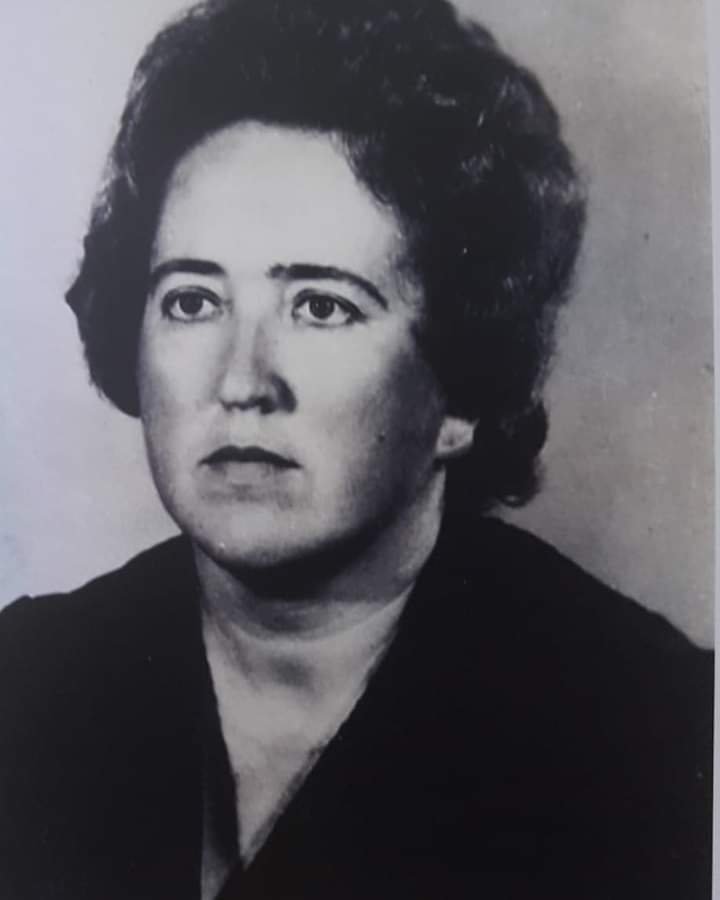
The Center named after A.I. Baraev directed State Scientific Programs in the USSR. A creative team of like-minded colleagues was formed under the leadership of A.I. Baraev: S.S. Sdobnikov, E.F. Gossen, A.A. Zaitseva, V.P. Kuzmin, P.P. Kolmakov, D.K. Postoyalkov, M.K. Suleimenov, B.A. Kopeev, V.I. Kiryushin, O.S. Khorikov, V.K. Movchan, A.S. Ermilov, E.I. Shiyatyi, N.M. Bakaev, E.D. Volkov, I.P. Okhinko, P.L. Sychev, I.G. Zinchenko, A.M. Nesterenko, K.A. Adilov, O.T. Ermolaev, A.S. Buryakov, N.V. Shumakov, A.G. Gromov, M.I. Matyushkov, N.G. Polikutin, and many, many others. They were the first leaders of individual programs and research areas and were well-known scientists in the country!! The aforementioned scientists trained an entire succeeding generation of scientists who actively continued the School of the Virgin Lands. Mention must also be made of the progressive production organizer Arkady Andreevich Seleznev, head of the Experimental Farm of the All-Union Research Institute of Grain Farming. An area of 48.0 thousand hectares of arable land served as a production and scientific site for testing the Institute's scientific recommendations. This site provided convincing evidence not only for agricultural producers in Kazakhstan but also for those throughout the Union. All-Union recognition and large-scale implementation of the methods and principles of the soil-protective farming system began after extensive testing and effective protection of soils from wind erosion in Kazakhstan. In the 1980s, the principles and methods of soil-protective tillage were implemented on more than 60.0 million hectares, including more than 20.0 million hectares in Kazakhstan. The successful implementation of soil-protective tillage methods was facilitated by the establishment of a network of regional agricultural research institutions and agricultural experimental stations dedicated to improving, implementing, and promoting soil-protective methods of tillage and sowing. In 1964, a special design bureau for anti-erosion machinery was established in Shortandy settlement and the city of Astana, and factories were built for the development of specialized machinery.
This was the first chapter in the history of the Soil-Protective Farming System!!
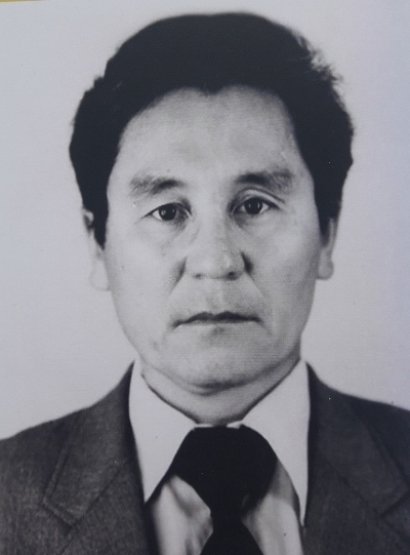
The next stage in the Center’s development and achievements consisted of scientific work under the leadership of Academician Mekhlis Kasymovich Suleimenov. The Institute continued to successfully and actively improve the soil-protective farming system on an all-Union scale. Mekhlis Kasymovich introduced the global scientific community to the scientific developments of Kazakhstan and the Center. He raised the Scientific and Production Center for Grain Farming to the international level. The scientific communities of Canada, the United States, and Australia could not have imagined that such scientific developments existed!! The principles for developing crop-rotation farming formulated at the A.I. Baraev All-Union Research Institute of Grain Farming by Academician Mekhlis Suleimenov were revolutionary. This was the next chapter in the development of soil-conservation farming. At present, our developments are not inferior to those of Canada in the level at which they address scientific problems. New scientific directions emerged through creative discussions. Based on the results of scientific research and their analysis, as well as an analysis of global achievements, Mekhlis Kasymovich put forward the idea of farming without fallow. After Alexander Ivanovich’s teaching that farming in arid conditions was impossible without a fallow field, this was a suicidal statement. Almost the entire scientific community of the Union condemned Suleimenov’s ideas. Ninety-nine percent of the scientists at his own Center were also opposed to these ideas. But these were not merely propositions: methodological solutions and convincing scientific results provided compelling arguments. These results were demonstrated at all levels. Science and practice later confirmed the correctness of these ideas. Research in other soil zones confirmed these propositions. At present, these developments are actively used by agricultural producers in Kazakhstan and Russia. This is genuine commercialization of scientific results. On the other hand, it also solved the problem of soil erosion in fallow fields. Crop-rotation farming addresses both the protection of soils against erosion and the improvement of soil quality and health.
Kazakhstani scientists actively promoted the ideas of soil-protective farming. K.Sh. Faizov (1960) was the first in Kazakhstan to classify soil types by degree of erosion and territorial distribution. Partially cropped sweet-clover fallows were recommended. Dzhanpeisov (1967) proposed a classification of southern chernozems and dark chestnut soils subject to deflation and developed diagnostic indicators. A.S. Uteshev and O.E. Semenov (1967) provisionally proposed threshold wind speeds to substantiate the speed of movement and transport of particles. Belgibaev (1965) proposed an assessment of soils based on structural analysis and developed a classification and methodology for mapping deflated soils in Northern Kazakhstan.
Promising directions for the development of dryland farming
The main challenges and pressing issues of today are actual climate change, soil degradation, artificial intelligence, an unstable market for agricultural products, and the high cost of technological operations. These are associated with unstable agricultural production. The Center is developing zonal, climate-oriented, soil- and resource-conserving farming based on the principles of conservation tillage and sowing systems, decarbonization, crop rotation, stabilization of soil health, regenerative farming, and soil-conservation farming; these are the main directions for improving and developing sustainable agroecosystems. The production of high-quality grain and other agricultural products is Kazakhstan’s advantage over other producers, and the task now is to find a place for this advantage in the market!!!
Profitable and sustainable agricultural production based on the rational use of natural resources, digital and intelligent solutions, management of the growth and development of agricultural plants, and improvement of soil quality forms the basis for adaptation to changing climatic and market conditions. From the standpoint of soil-protective/environmentally sound farming, it is necessary to reassess the range of agricultural implements used for soil preparation.
Climate change is a real challenge to agricultural production. Over the past decade in Kazakhstan, the number of hot days with dry winds has increased significantly in certain regions. Developing a program for forecasting climate change and zoning the territory, for example, by the degree of climate aridity and soil types, is becoming increasingly relevant. This is particularly important for the Asian part of the country and affects the interests of the entire Eurasian continent. Increasing warming heightens the vulnerability of the agricultural sector, affects biodiversity and ecosystems, and leads to a broader and more severe spread of pests and plant diseases. A scientifically based system for protecting soils from erosion is built on the anti-erosion organization of land-use areas. It is necessary to establish working plots and crop rotations according to their degree of resistance to erosion, taking into account relief, soil texture, and the topography of the site. With the development of market relations and the diversification of crop production, the range of agricultural crops with varying degrees of resistance to erosion has expanded. A decline in soil fertility leads to a decrease in soil carbon content, which makes a fundamental contribution to global climate change. Kazakhstan's steppe ecosystems have potential as carbon reservoirs, which is important in view of the threat of “global warming.”
To address this issue, it is necessary to identify zones where intensive wind erosion of soils is likely to occur, determine which soil types are most susceptible to the transport of soil particles, and forecast this process. The use of a network of meteorological stations in Kazakhstan’s various agroecological zones will make it possible to monitor climate change. An analysis of long-term data together with actual manifestations of wind conditions will make it possible to identify zones in which threshold wind-speed values occur in space and time, causing recurrent dust storms and the transport of soil particles. The first research results show the promise of measuring actual soil-particle transport using a unique mobile soil wind tunnel provided by colleagues from Germany. Correlating wind conditions with changes in weather conditions and actual soil loss will make it possible, first, to identify probable natural geographic zones (“wind corridors”) and, second, to plan the structure of arable-land use and the placement of agricultural crops according to their biomass and susceptibility to wind erosion.
Under the Paris Convention on reducing CO2 emissions, changes in land-use practices, targeted measures to mitigate impacts, and changes in the pace of decarbonization will be required. The primary focus should be on soil “health” and the control of erosion processes by improving the physical, chemical, and biological properties of soils and their organic carbon content, improving tillage systems, using agricultural crops with different aboveground and belowground biomass according to the principles of regenerative farming, and creating mulch and plant biomass in the surface soil layer. System transformations consistent with limiting global warming to 1.5°C and adapting to it include the widespread introduction of new, more effective climate-oriented farming systems aimed at mitigating the negative impacts of climate and improving soil fertility.
Reliable climate forecasts will make it possible to plan environmentally sound farming to preserve and improve soil fertility. We are currently monitoring climate change in different climatic zones of Kazakhstan. Based on these patterns, recommendations will be developed for individual territories; this will provide a basis for agricultural organizations to plan their farming strategies and tactics. Data on patterns of climate change in individual territories will help plant breeders develop varieties adapted to the landscape conditions of the land-use area.
In our research, priority is given to decarbonization, carbon neutrality, and reducing carbon dioxide emissions by 15% by 2030, which form the basis for the transition to a green economy and for mitigating the negative effects of weather conditions.
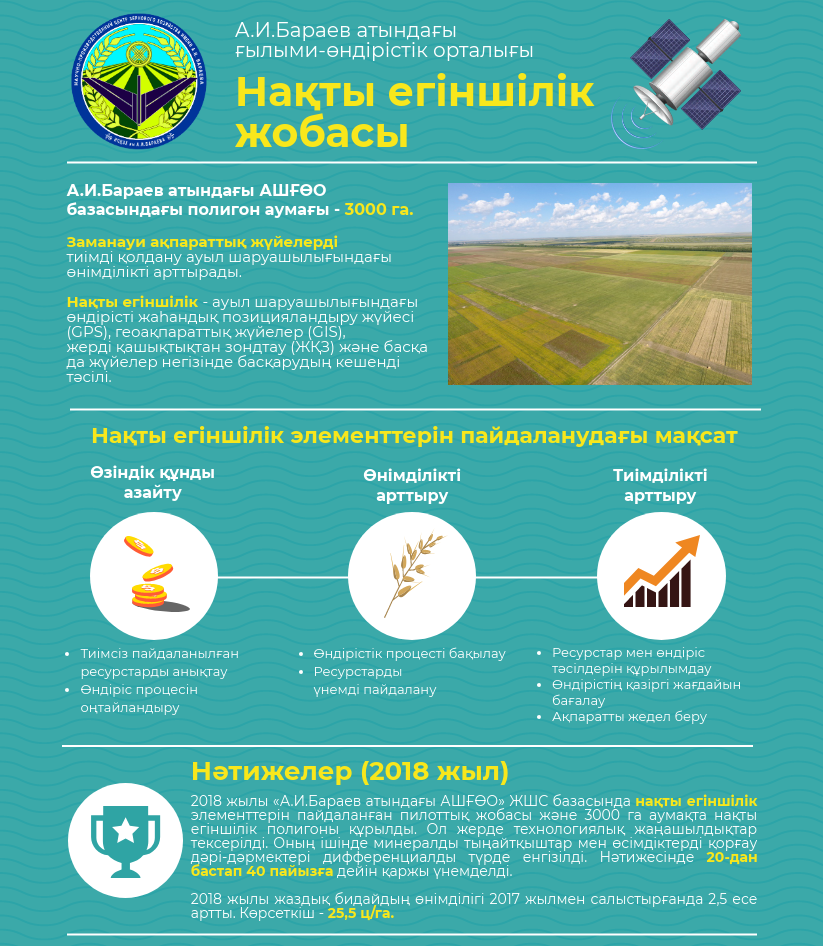
Innovative technologies using digital platforms for the country’s various soil and climatic zones, the use of new software tools (GIS technologies, Earth remote sensing data, artificial intelligence), and other Internet of Things technologies for the country’s various soil and climatic zones represent the knowledge-intensive nature of agricultural production and provide a database for rational production management. A productive component of our research solutions is the scaling up, transfer, and commercialization of climate-oriented, soil- and resource-conserving farming systems using digital platform tools at the level of agricultural production units in the country’s various soil and climatic zones. The development and implementation of the soil-protective farming system provide an example!! An understanding of these contemporary challenges and a continued active alliance between scientists and producers will enable Kazakhstan to consolidate its position among the world leaders in agricultural production.
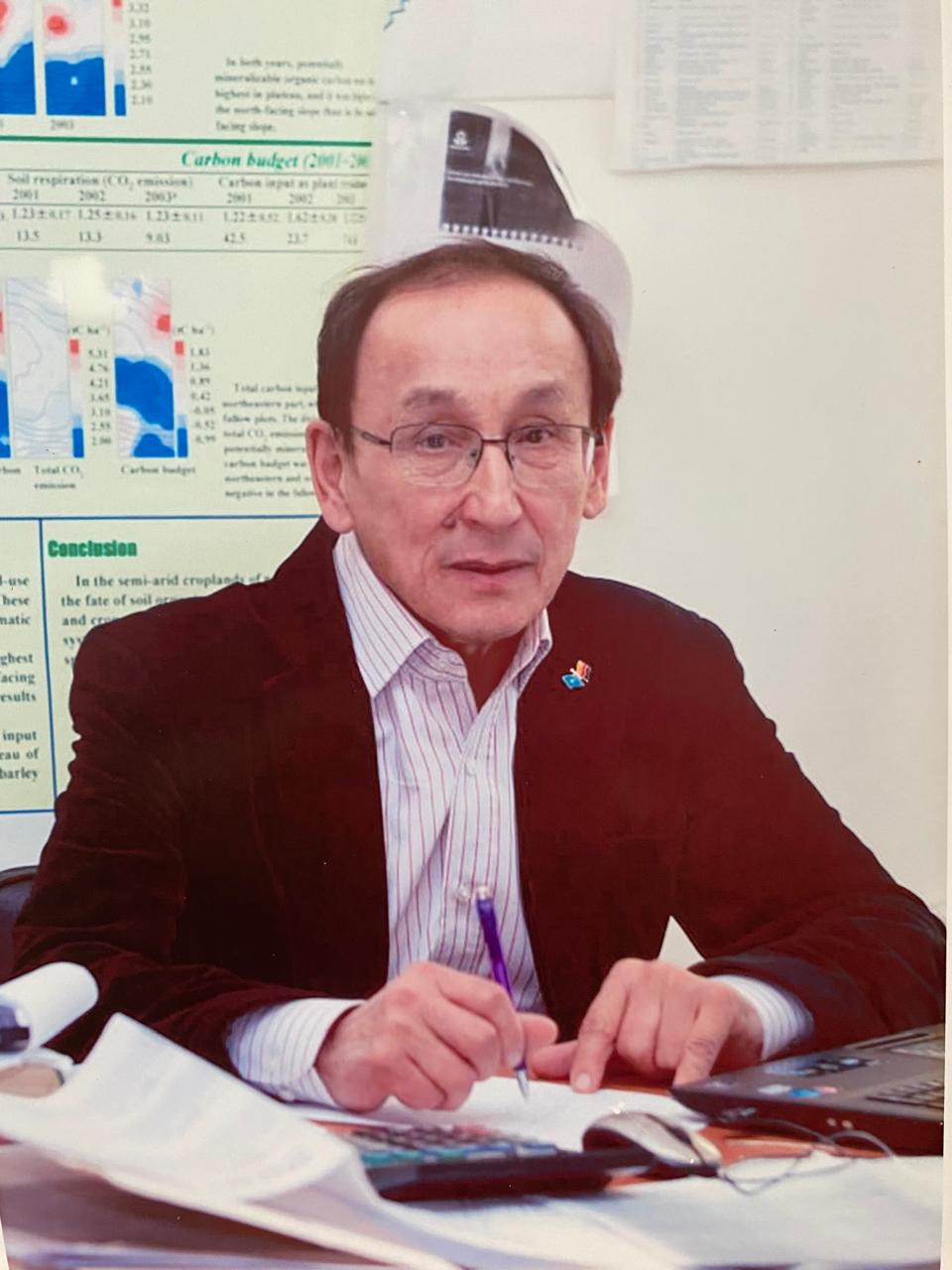
Kanat Ashkeevich Akshalov, Head of the Laboratory of Agrolandscape and Adaptive Technologies at the A.I. Barayev SRI of Grain Farming.